
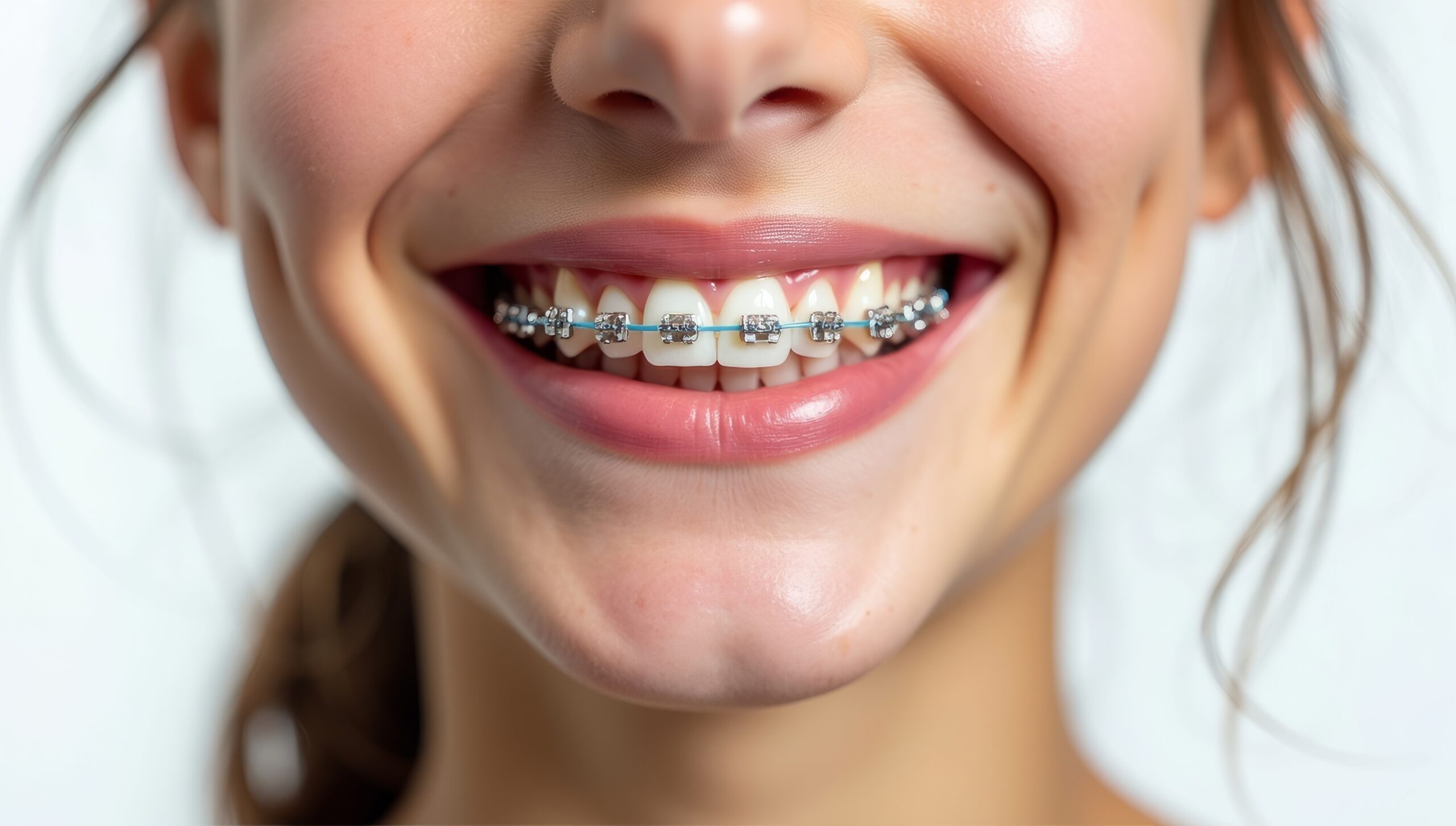
Orthodontics in Wrocław: the key to a beautiful smile.
A beautiful smile starts with healthy teeth. It is important to take care of them for both aesthetic and health reasons. Straight, evenly spaced teeth can significantly improve facial appearance and boost confidence in social and professional situations.
However, crowded or overlapping teeth can make thorough brushing and flossing difficult, which can lead to plaque build-up, tooth decay, and gum disease. Malocclusion can lead to chewing difficulties, putting strain on the digestive system and potentially causing speech impediments. It can also lead to excessive tooth wear (abrasion) and pain in the temporomandibular joints, as well as in the head and neck. Correcting the alignment of your teeth helps to prevent long-term dental problems that could require more invasive and costly treatment in the future.
Here’s how orthodontics works in a few simple steps:
The process begins with a visit to the dentist, who will carry out a thorough examination of the oral cavity. This usually Includes a series of diagnostic procedures aimed at accurately assessing the patient’s bite, facial structures, and oral health. These form the basis for planning effective treatment.
The main components of an orthodontic analysis are:
- Medical and dental history: A detailed interview with the patient about their general health, past illnesses, any facial injuries and previous dental and orthodontic treatment.
- Clinical examination: This includes an examination of the face to assess symmetry and profile, an examination of the oral cavity to assess teeth, gums, and mucous membranes, and an assessment of the function of the stomatognathic system, including temporomandibular joint function, swallowing, and speech.
- Photographic documentation: A set of photographs of the face (frontal, profile and smiling) and teeth is taken for thorough analysis of facial aesthetics and bite, and to monitor treatment progress.
- Diagnostic models (impressions): Physical or digital representations of the patient’s dental arches, enabling precise measurement of the teeth and analysis of the dental arch shape, as well as the simulation of changes.
- Radiological examinations:
- Pantomographic image (OPG): A panoramic image of all the teeth and both jaws, enabling the assessment of root condition, the presence of impacted teeth, caries, and bone condition.
- Cephalometric radiograph (lateral teleradiograph of the head): This is an X-ray image used to make precise measurements of angles and distances between specific anatomical points (cephalometric analysis). It assesses the relative position of the upper jaw, lower jaw, and skull base.
- Cephalometric radiograph (lateral teleradiograph of the head): This is an X-ray image used to make precise measurements of angles and distances between specific anatomical points (cephalometric analysis). It assesses the relative position of the upper jaw, lower jaw, and skull base.
Based on the collected data, the doctor makes a diagnosis and present the patient with a comprehensive, personalised treatment plan, including information on the choice of orthodontic appliance, the expected duration of therapy, and the costs involved.
Choosing the right orthodontic appliance
The right orthodontic appliance for a patient depends on various factors, including the type of malocclusion, the patient’s age, aesthetic expectations, lifestyle, and financial circumstances. This decision is always made jointly with the dentist after a full orthodontic analysis has been carried out.
- Fixed (traditional) braces: Metal or ceramic brackets are bonded to the teeth and connected by wires and ligatures. They are very effective in complex cases.
- Removable braces: These are plates that patients can put on and take off themselves. They are mainly used for children during their growth period to correct mild defects and stimulate proper jaw development.
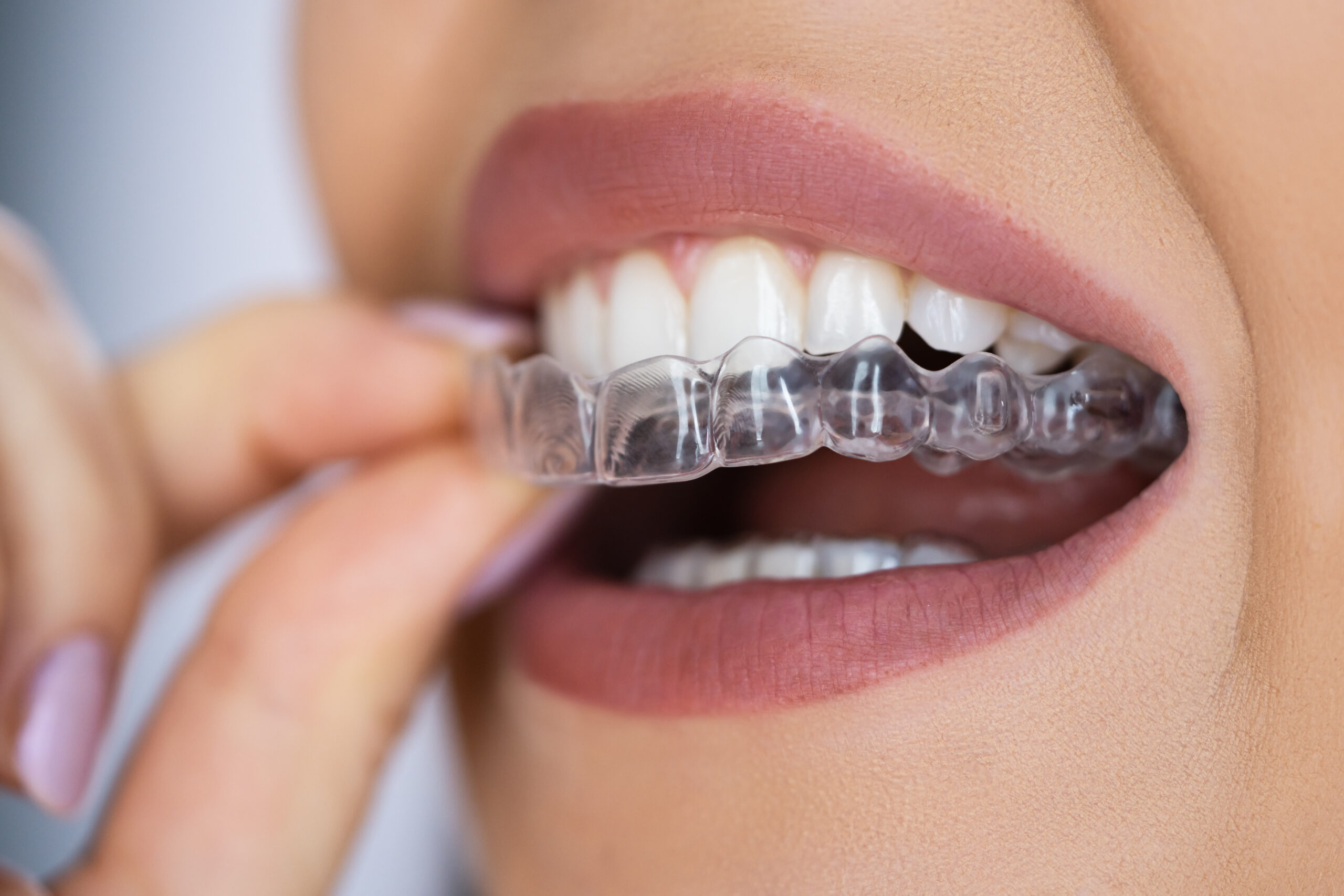
- Clear aligners: A series of custom-made, removable aligners (e.g. Invisalign) that gradually move the teeth.
Preparing for treatment
Before braces are fitted, the mouth must be in perfect condition.
- All cavities must be treated.
- Any inflammation of the gums or periodontium must be treated.
- Professional teeth cleaning (scaling and sandblasting) to remove tartar and deposits.
Faza aktywna leczenia
This is the most important stage of the treatment. Regardless of the type of appliance used, the principle of operation remains similar.
- The appliance exerts constant, gentle pressure on the teeth.
- This pressure stimulates biological processes in the upper and lower jaw bones: the bone is resorbed (dissolved) at the point of pressure and rebuilt where the tooth moves.
- The patient visits the dentist regularly (usually every 4–8 weeks) to adjust the braces, which involves tightening the wires, replacing the arches and elastics, or receiving new aligners.
The length of this phase varies and depends on the complexity of the defect, the age of the patient and the type of braces, usually lasting from several months to several years.
Retention phase (maintaining results)
Once the desired tooth alignment has been achieved, the active braces are removed. However, this is not the end of the treatment. Teeth tend to return to their original positions, which is why retention is necessary.
- Once the desired tooth alignment has been achieved, the active braces are removed. However, this is not the end of the treatment. Teeth tend to return to their original positions, which is why retention is necessary.
- Retainers can be fixed (a thin wire bonded to the back of the teeth) or removable (a transparent overlay or plate).
- Wearing the retainer as recommended by the dentist is crucial for ensuring the durability of the treatment results.
Supporting devices and elements.
In addition to the main appliances, orthodontists also use supporting devices and elements.
- Elastic extractors (orthodontic rubber bands): Small rubber bands that patients put on at home to connect the upper and lower teeth in a specific way, correcting the position of the jaws.
- Orthodontic microimplants (TADs): Temporary miniature screws that serve as stable anchor points for precise tooth movement.
- Retainers: Appliances (fixed or removable) worn after active treatment to keep the teeth in their new position.
The choice of treatment method is always the dentist’s decision, made after thoroughly diagnosing and analysing the patient’s needs.
Follow-up visits to the orthodontist.
Orthodontic treatment requires regular follow-up visits to the orthodontist, and cooperation between the patient and the dentist. It is important to attend these visits so that the dentist can monitor the progress of the treatment and adjust the braces as the teeth move.
These visits are usually short and painless, and how often they are needed depends on the stage of treatment and the type of braces. They usually take place every 4–8 weeks. During the check-up, the dentist will also assess your oral hygiene and recommend appropriate care for your teeth and braces.
Orthodontics – Frequently Asked Questions
Why is treating malocclusion so important?
An experienced dentist not only ensures an attractive smile but also restore proper chewing, speech and hygiene functions. Prevents speech and breathing problems, which is crucial for preserving natural teeth for years to come and improving quality of life.
At what age can orthodontic treatment begin?
It can be started at any age: from early childhood for preventive purposes; through school age, with removable braces; and into adulthood, with modern fixed and aesthetic braces. This is because bone tissue remains malleable throughout life. However, treatment in adults may be longer and more complex.
If left untreated, malocclusion can have unpleasant consequences, especially for children. It can lead to damage to permanent teeth, as well as the development of caries and gum disease. It can also cause the malocclusion to progress, leading to speech defects and rapid tooth wear.
Another consequence is sometimes a lack of space for permanent teeth, which can cause crowding or impacted teeth.
Thanks to the latest solutions, such as the so-called ‘orthodontic facelift’, we can correct malocclusion and delay the effects of ageing at the same time. Thanks to advanced technology and modern tools available at the MedicaDent clinic, you can achieve a beautiful smile without the use of Botox and fillers.
What problems can an untreated malocclusion cause?
If left untreated, malocclusion can have many unpleasant consequences for the whole body. An incorrect bite can significantly impact many pain conditions.
Patients do not always immediately associate these conditions with malocclusion and the need for orthodontic treatment. The most common ailments reported by people with untreated malocclusion include:
- balance disorders
- frequent headaches and migraines
- dizziness
- tinnitus
- sleep apnoea;
- neck stiffness and poor posture
- problems with speech, swallowing or digestion
A common symptom of temporomandibular joint dysfunction is impaired jaw mobility, difficulty swallowing, rapid tooth wear and persistent pain in healthy teeth.
However, increased tension in the masticatory muscles caused by untreated malocclusion often leads to compensatory tension in other muscle groups. For this reason, patients may complain of chronic headaches and pain in the neck, shoulders or back.
It is worth remembering that it is never too late for orthodontic treatment!
Modern orthodontics offers effective treatment for malocclusion, significantly improving the aesthetics of your smile and relieving the pain caused by incorrect tooth alignment.
Choose a proven doctor – a good orthodontist in Wrocław!
The key to effectively treating malocclusion is a proven clinic. Our orthodontic treatment plans are determined based on detailed examinations and the condition of your teeth. We treat malocclusion in patients of all ages.
In order to effectively correct malocclusion, we offer a range of services tailored to the individual needs of each patient.
Book an appointment to find out how little it takes to achieve a beautiful, healthy smile.
We provide comprehensive diagnostics and a personalised treatment programme for each patient. Visit our centre to correct your malocclusion and take care of your health and beautiful smile.
See also:
Zobacz też:
orthodontic braces Wrocław
fixed orthodontic braces Wrocław