
Removable orthodontic appliances Wrocław
Removable orthodontic appliances are appliances that patients can put on and take off themselves. They are widely used, but their effectiveness depends on the patient’s age and the type of malocclusion.
They can be divided into traditional applications, which are mainly for children, and modern applications, such as aligners for adults.
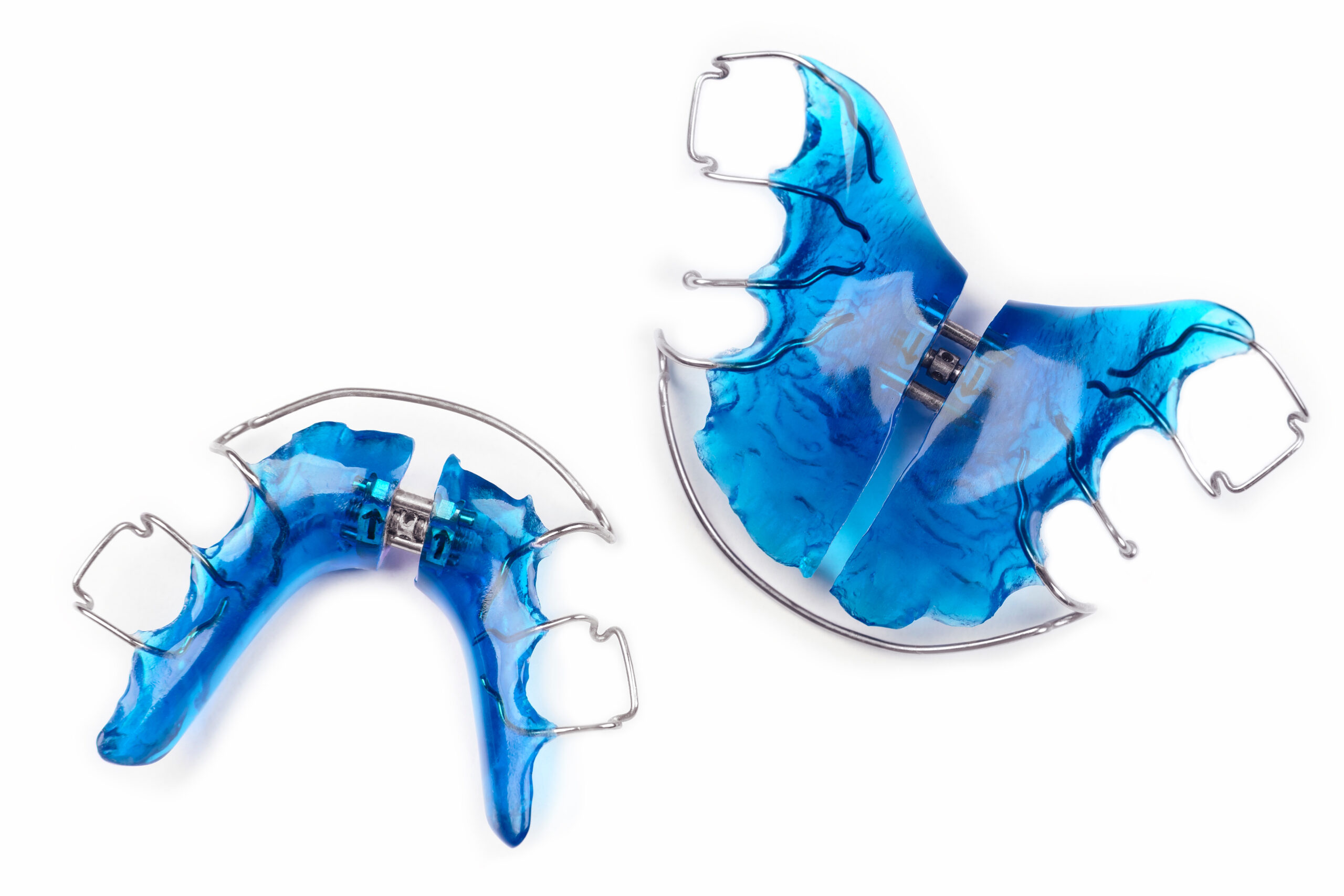
For children and adolescents, traditional acrylic plates (such as Schwartz plates and Hess plates) are used. These are the most classic removable appliances and are made individually for each patient from coloured acrylic and metal elements (such as brackets, screws and arches). They are used during the growth period (usually between the ages of 4 and 12), when the jawbones are still developing.
Application:
- Correction of skeletal defects. These appliances stimulate or inhibit bone growth, which becomes impossible once growth is complete.
- Widening dental arches: They help to create adequate space for permanent teeth to erupt, thereby preventing crowding in the future.
- Treatment of simple malocclusions: They effectively correct minor and moderate defects, such as:
- Retrognathia (receding lower jaw).
- Prognathia (protruding lower jaw).
- Crossbite.
- Preparation for permanent braces: Sometimes, treatment with removable braces is the first stage of a longer treatment plan aimed at creating the right conditions (e.g. sufficient space) for permanent braces.
- Elimination of harmful habits: These help to eliminate habits such as thumb sucking, which can cause malocclusion.
How they work: They exert pressure on the teeth and jawbone using screws, which the patient tightens at home according to the doctor’s instructions, and springs.
- Wearing: They require discipline and are usually worn for several hours a day (e.g. 12–16 hours, including overnight). Their effectiveness depends entirely on the patient’s cooperation.
- Advantages: You can choose the colour of the braces (this is popular with children) and they are relatively low cost compared to fixed braces.
- Disadvantages: They are visible in the mouth, they may make speaking difficult at the beginning of treatment and they require consistent wearing.
Transparent aligners (e.g. Invisalign or Clear Aligner)
Traditional acrylic plates have very limited application in adults, due to completed bone growth. These are replaced by transparent aligners, which are used for:
- Aesthetic correction: Treatment of mild to moderate crowding, gaps between teeth (diastema) or tooth rotation, when patients want discretion.
- Relapse treatment: Correction of minor tooth movements that have occurred after previous orthodontic treatment if the patient did not wear retainers.
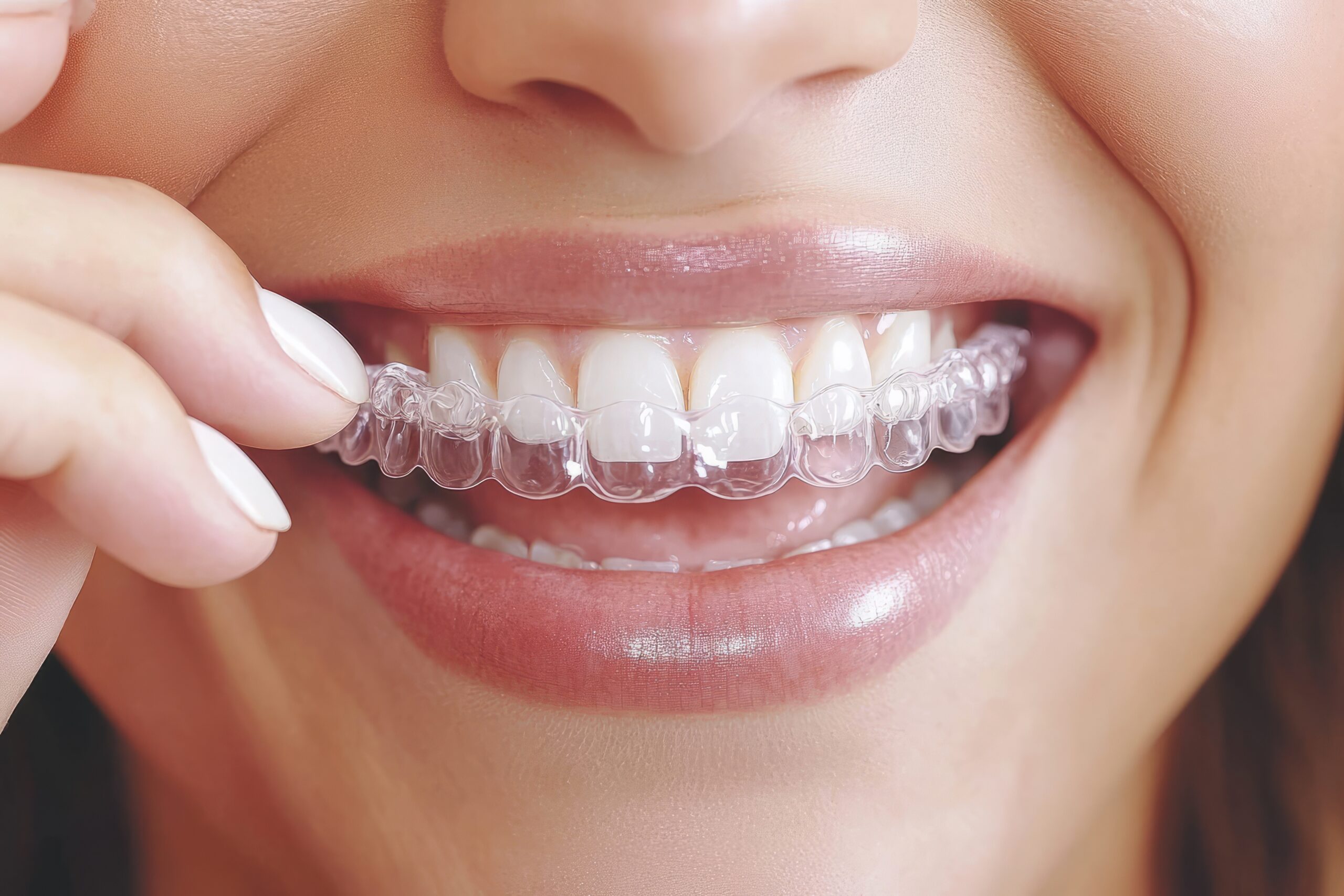
How it works: Patients receive a series of precisely fitted aligners that are replaced with new ones every one to two weeks, gradually moving the teeth to their target position. The entire process is planned digitally.
- Wearing: The aligners should be worn for 20–22 hours a day. They should only be removed for meals and tooth brushing.
- Advantages: Almost invisible, very aesthetic, comfortable (no metal elements), easy to maintain oral hygiene.
- Disadvantages: The cost of treatment is significantly higher than with traditional removable or fixed metal braces and they require a lot of discipline in terms of wearing time.